
A branded portal only earns its place when it helps people complete the work behind a delivery. Before choosing a white-label logistics platform, define the workflow it should coordinate, the systems it must connect and the tasks each user needs to perform.
Define the role of the platform
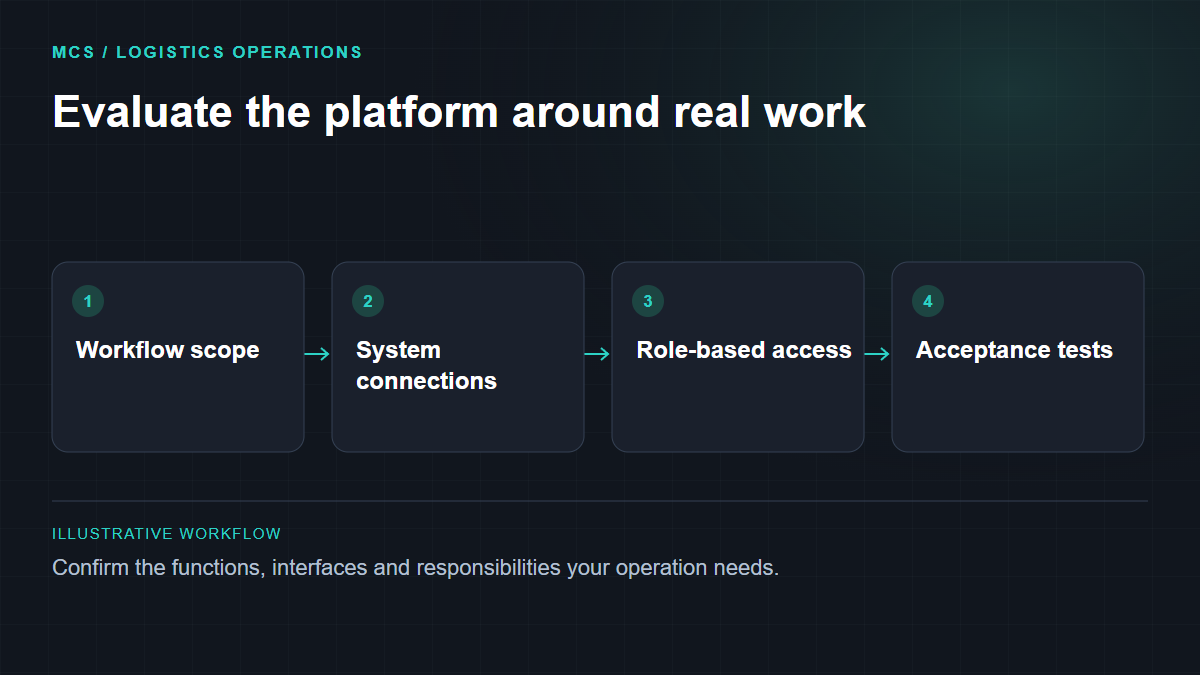
Identify the workflows you want to coordinate and the systems already responsible for them. A TMS may remain the planning and execution system while a connected platform coordinates retailer intake, inventory events or billing information. Document those boundaries to avoid conflicting records.
Ask which functions are included, which require configuration and which depend on external interfaces. A broad product category is not a guarantee that every process in your operation is supported without additional work.
Treat integration as an agreed data relationship
Map identifiers, required fields, event definitions and error responses between the platform, retailer systems and TMS. Consider the full order lifecycle, including changes, cancellations, unsuccessful deliveries and returns.
Confirm the permissions and commercial access required for each interface. A named integration should be assessed against the account, version and workflow you actually use, not treated as blanket compatibility.
Specify access around real responsibilities
List the people and organizations who need access and the tasks they should perform. Operations staff, finance users, retailer contacts and customers may need very different views. Define administrative responsibility and the processes for granting, changing and removing access.
Review how customer information, delivery evidence and exports are handled. Security is a set of implemented controls and maintained responsibilities; a white-label presentation or an integration feature does not establish compliance or eliminate risk.
Make exception handling visible
Ask how the platform identifies duplicate records, failed updates, incomplete orders and conflicts between systems. Operational users need a useful reason and next action, while support teams need enough diagnostic history to investigate.
Agree what happens when a partner interface is unavailable or a rule changes. Define who can approve a correction and how a corrected record reaches downstream systems without losing the original context.
Validate the platform with the people doing the work
Build acceptance tests from representative orders and common exceptions. Include a warehouse operator, dispatcher, customer service user and finance reviewer where those roles are in scope. Evaluate whether each person can complete the task and understand the resulting record.
MCS develops TrackOps as a white-label logistics platform. Its configuration and integrations are scoped around operational requirements rather than presented as a universal replacement for every carrier system. Start with the handoff that creates the clearest friction.
Test a user task instead of a feature label
Illustrative evaluation: a finance user needs to review a completed order while a retailer contact needs a limited delivery view. The acceptance test checks the information and actions available to each role using representative records.
The test also checks what happens when the underlying delivery update is missing or rejected. A useful evaluation establishes how the user recognizes the gap and who owns the correction. A branded screen alone does not answer those operational questions.
What to measure
Record whether each user can complete the defined task, recognize an exception and identify the next owner. Track required manual work and unresolved integration dependencies before comparing broader platform value.
Questions to include in a platform evaluation
- Which system owns each operational fact?
- Which interfaces and permissions are required?
- What can each user role view or change?
- How are rejected, duplicated and corrected records handled?
- Who accepts the implementation and supports it after rollout?
Common questions
Does white-label mean the platform is fully custom software?
Not necessarily. White-label describes how a platform is presented under another organization’s brand. Configuration, custom development and integration work must be clarified in the agreed scope.
Does a platform replace the need for access governance?
No. The business still needs defined roles, approvals, account ownership and ongoing review. Those responsibilities should be part of the implementation and support plan.
Plan your next step
Bring one workflow and the roles that need access. MCS can help evaluate where TrackOps fits alongside your current tools and define an acceptance scope.